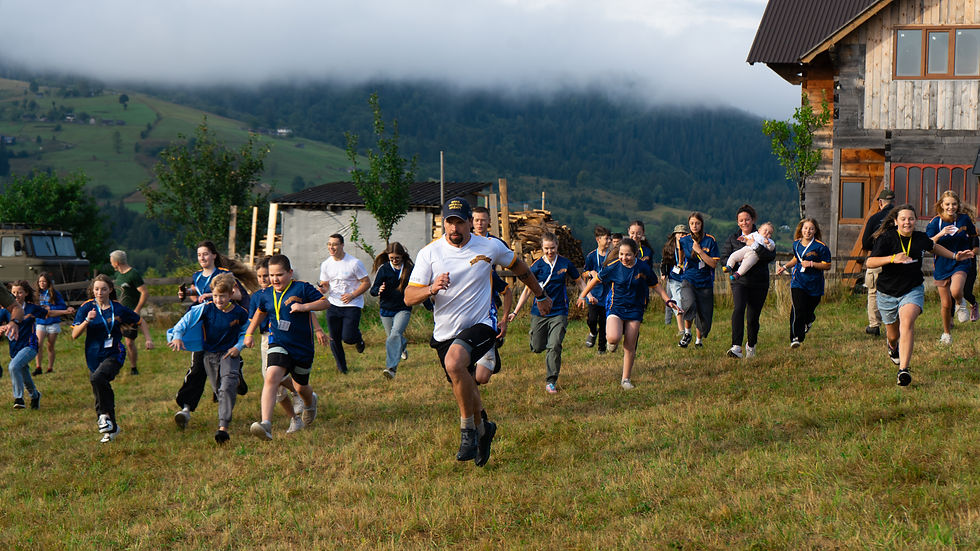
Junior Rangers Training: Rangers Training the Next Generation

It was a full house at our Feb. 17 Good Life Club program at an Internally Displaced Persons (IDP) camp in Karenni State, Burma. Our team led lively songs and entertainment for the children who packed into the tarp-lined auditorium. This covered structure, along with all the others at the camp, was perched on a hillside, carefully situated between trees and under jungle cover for protection from air attacks by the Burma Army. Many of the students at this program had moved to this site after multiple attacks on previous IDP camps where they had lived.
After we sang a few songs with the children, one of the older students asked if they could sing for us. The auditorium, filled with 500 students, soon swelled with the chorus in English: “I can do it! You can do it! We can do it together! We will never, ever, ever give up!” In fact, three-quarters of the 500 students attending this program were in secondary school, and their dreams of adulthood were close at hand. This was one of three songs for which they had written both the music and lyrics, and which we recorded for them.

Our main Good Life Club (GLC) program—a time of games, dancing, and teaching—typically focuses on elementary-aged students, but our FBR teams are also prepared to lead a Junior Ranger course for high school students. The Junior Ranger concept meets two significant needs: it reinforces the Rangers’ skills acquired during training and provides unique instruction for older students, showing them opportunities to serve their own communities vocationally after graduation.
Toward the end of the GLC program, the Rangers and secondary students met in a separate classroom to learn about leadership, first aid and trauma response, reporting, Bible study, chaplaincy, and self-defense. Pyo Gyi, a new Ranger, was teaching about tourniquets.

He said, “This subject is so important because these students would not otherwise have a way to learn this lifesaving skill. We practiced it during our combat medic training and can now pass it on to them. Combat medicine is something all of us need because of the dangers we face. With these skills, these high school students can also help save lives. The most important thing, though,” Pyo Gyi added, “is learning about servant leadership.”
Pyo Gyi came to faith in Jesus last fall during FBR training and was baptized in December along with 23 other Rangers. “We really need the servant-leadership model for our people and for our future generation,” he said.

Phoe Aung, an advanced second-year Ranger, said, “The students really enjoyed the medic training. They told me that it would be useful for their future vocations.” Phoe Aung is the Pa-Oh team leader, who also became a Christian and was baptized last year at Ranger graduation. He added, “I really love sharing my experiences with others to help them in their future. This group of students is especially blessed because the leadership session I taught gave them a chance to reflect on the strong, positive leadership qualities of their own headmaster, and they really enjoyed discussing leadership.”

Thank you for praying for our Rangers, who learn valuable skills through FBR training and then share them with others, and for the secondary school students of Burma, who are at a unique stage in their lives as they seek God’s opportunities for their futures.
Thanks and God bless you,
Karen, Family, and the Free Burma Rangers