Burma Army Offensive Levels 12 Kachin Villages, Displacing Thousands
Updated: Oct 8, 2025
Shwegu Township, Kachin State
Offensive Summary
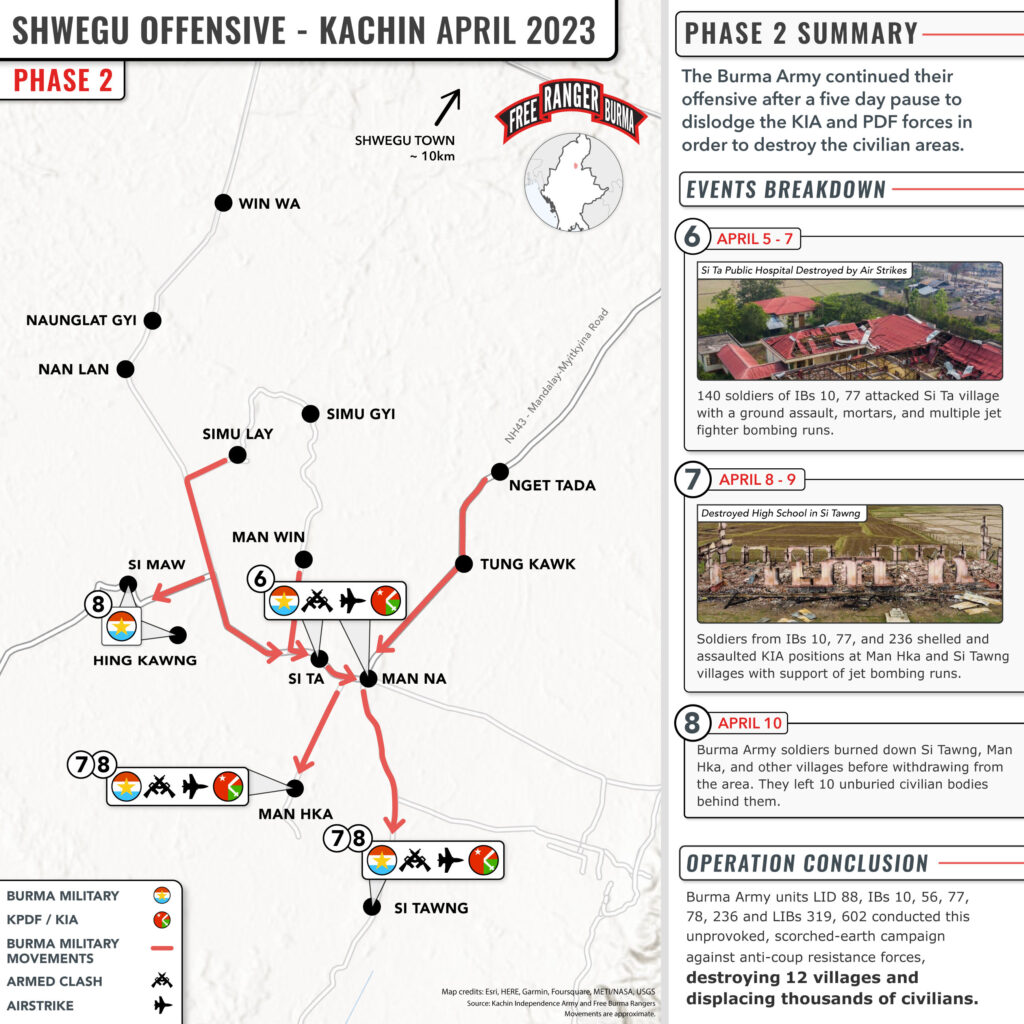
Between 23 March to 10 April, 2023, around 320 Burma Army soldiers of Light Infantry Division (LID) 88, Infantry Battalions (IBs) 10, 56, 77, 78, and 236, and Light Infantry Battalions (LIBs) 319 and 602 conducted an offensive against the combined forces of Kachin Independence Army (KIA) 12th Battalion, Kachin People’s Defense Force (KPDF), Local Defense Forces (LDF), and local militia in Shwegu Township, Kachin State. The Burma Army focused their attacks in the area around Si Ta Village, a milestone along the NH43 Mandalay-Myitkyina transportation route.
During the three weeks of clashes, the Burma Army troops systematically launched ground attacks, mortar/artillery strikes, and air strikes against the KIA, KPDF, and LDF resistance forces while simultaneously killing civilians, bombing civilian areas, burning homes, and taking civilians as human shields. The offensive resulted in the deaths of at least 26 people, the destruction of 12 villages, and the displacement more than 8,875 villagers.
Offensive Phase I – March 23rd through March 30th
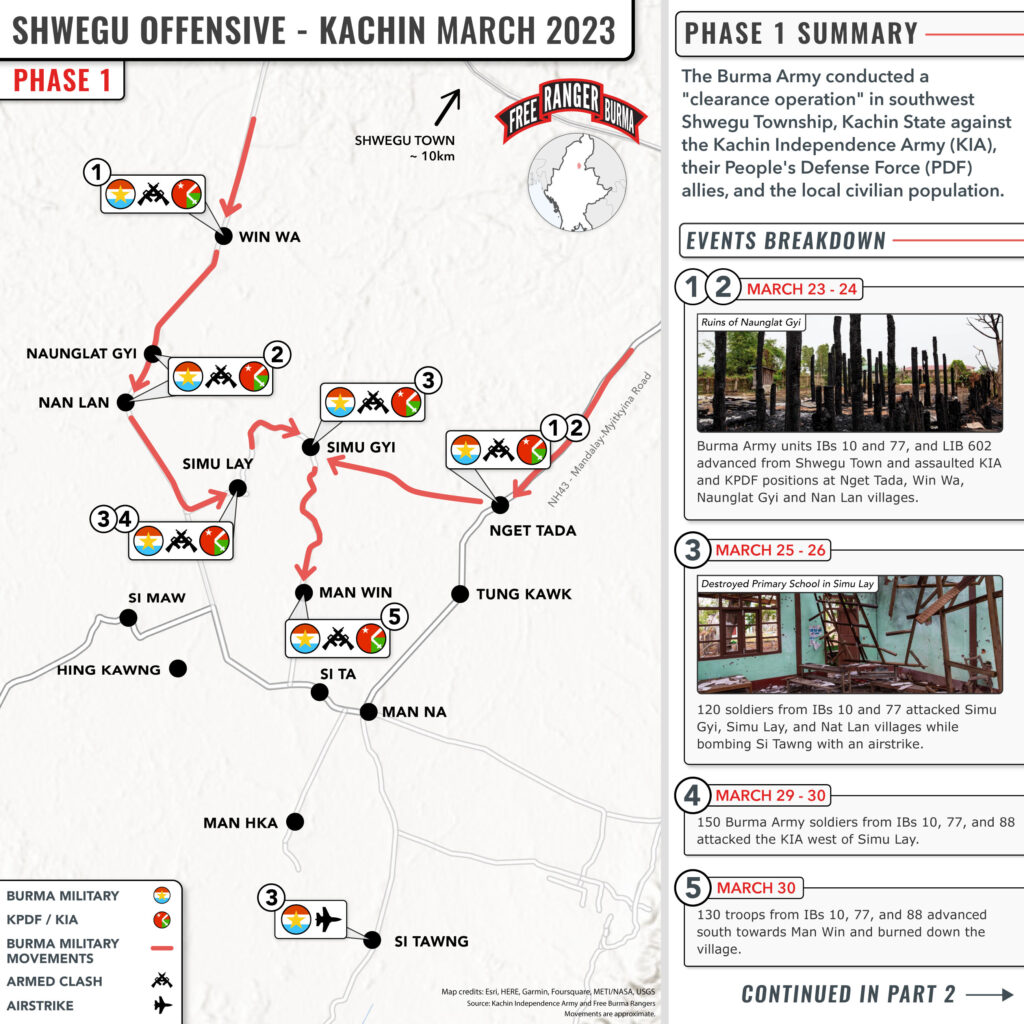
Our FBR teams on the ground gathered interviews from local villagers regarding the civilian harm from the Burma Army operation. A local villager remarked about the arrival of the Burma Army, “Upon hearing of the advance of the Burma Army troops, we fled to a nearby forested area at the foot of mountain and some fled to their relatives in Shwegu town. Some families could take their few properties but most could not.”
Offensive Phase II – April 5th through April 10th
Offensive Aftermath
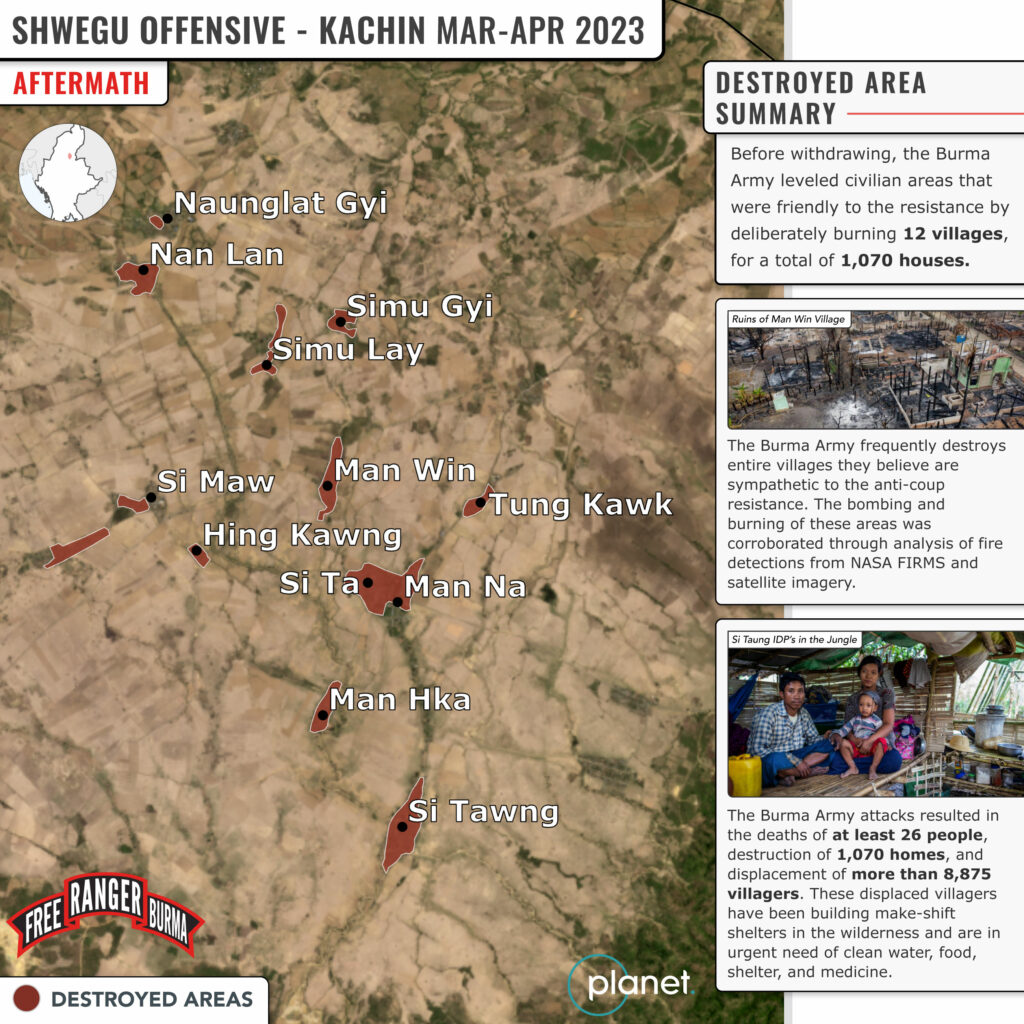
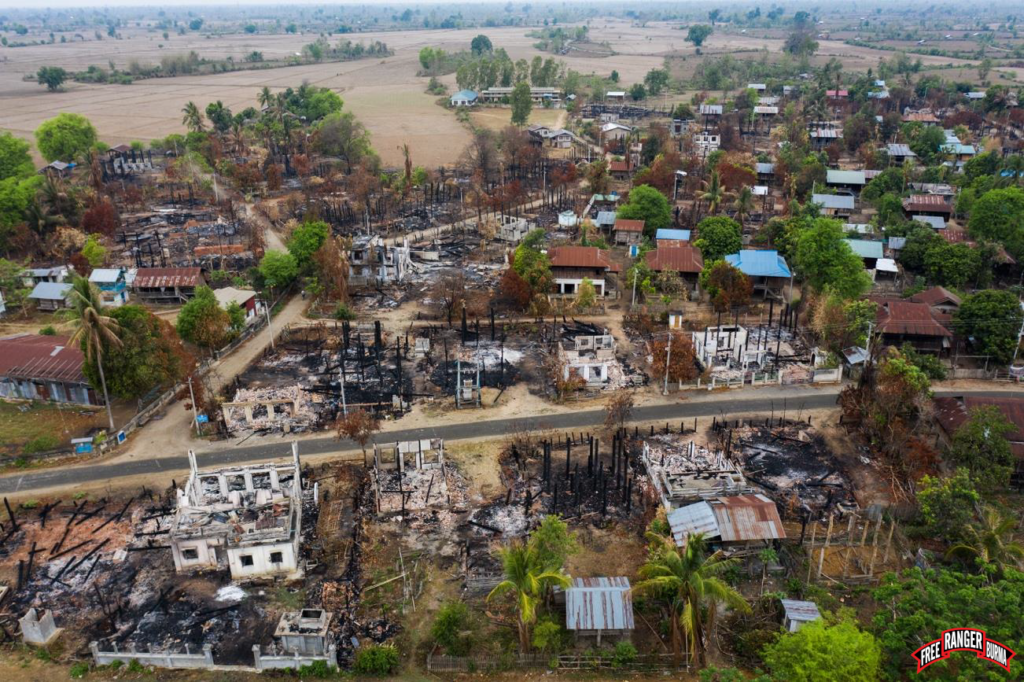
The burning and destruction of village areas by the Burma Army was corroborated using Planet Labs satellite imagery, Sentinel-2 Infrared Imagery (before / after), and NASA FIRMS fire detection events. Table I below displays a breakdown of the losses by village, which shows a consistent theme of methodical destruction of homes by the Burma Army.
Village | Households | Population | Houses burned | Houses destroyed by shells | Total houses destroyed | % Destroyed | Coordinates |
Hing Kawng | 48 | 233 | 36 | 0 | 36 | 75% | 47R KG 68805 70676 |
Man Hka | 131 | 506 | 35 | 0 | 35 | 27% | 47R KG 70089 68952 |
Man Na | 107 | 530 | 48 | 3 | 51 | 48% | 47R KG 70888 70107 |
Man Win | 180 | 855 | 132 | 38 | 170 | 94% | 47R KG 70176 71323 |
Nan Lan | 173 | 900 | 103 | 0 | 103 | 60% | 47R KG 68298 73588 |
Naunglat Gyi | 160 | 500 | 36 | 2 | 38 | 24% | 47R KG 68558 74114 |
Si Maw | 260 | 1330 | 111 | 0 | 111 | 43% | 47R KG 68343 71234 |
Si Ta | 226 | 1076 | 100 | 0 | 100 | 44% | 47R KG 70582 70313 |
Si Tawng | 336 | 1756 | 225 | 30 | 255 | 76% | 47R KG 70898 67782 |
Simu Gyi | 74 | 415 | 44 | 0 | 44 | 59% | 47R KG 70344 73017 |
Simu Lay | 98 | 510 | 76 | 0 | 76 | 78% | 47R KG 69565 72583 |
Tung Kawk | 68 | 264 | 41 | 10 | 51 | 75% | 47R KG 71723 71087 |
Total | 1861 | 8875 | 987 | 83 | 1070 | 57% |
Table I: Burma Army Impacts to Civilians During the Operation
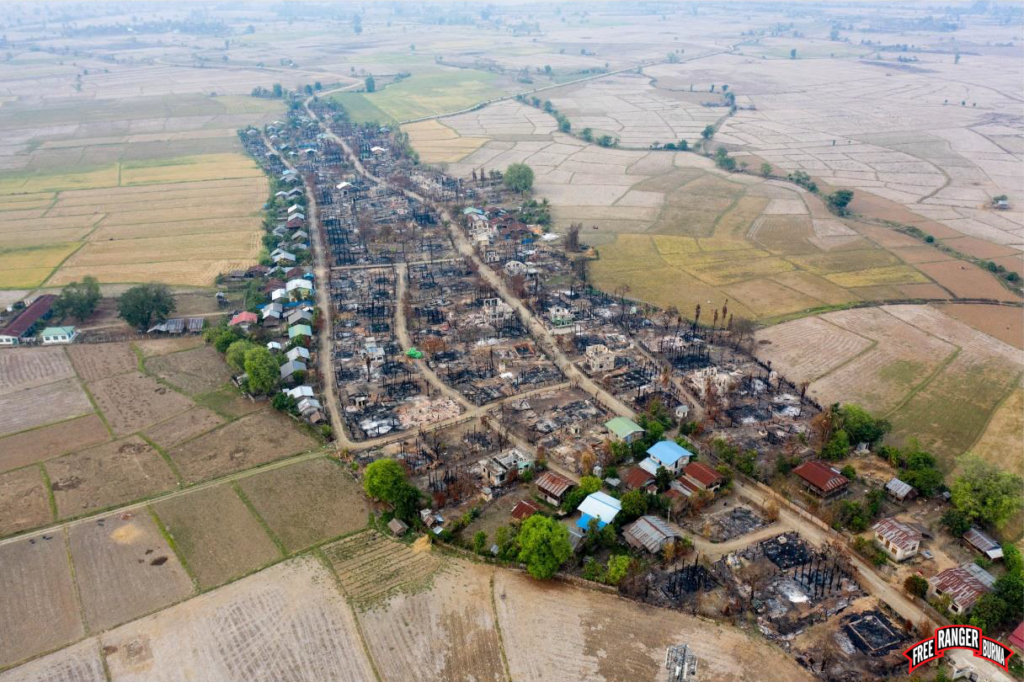
One villager remarked on the human losses from the destruction, “During the clashes, 10 Si Ta villagers (including Burma Army supporters) were killed and cremated by Burma Army when they went to check their houses and farm animals with the thought of they would not be harmed.”
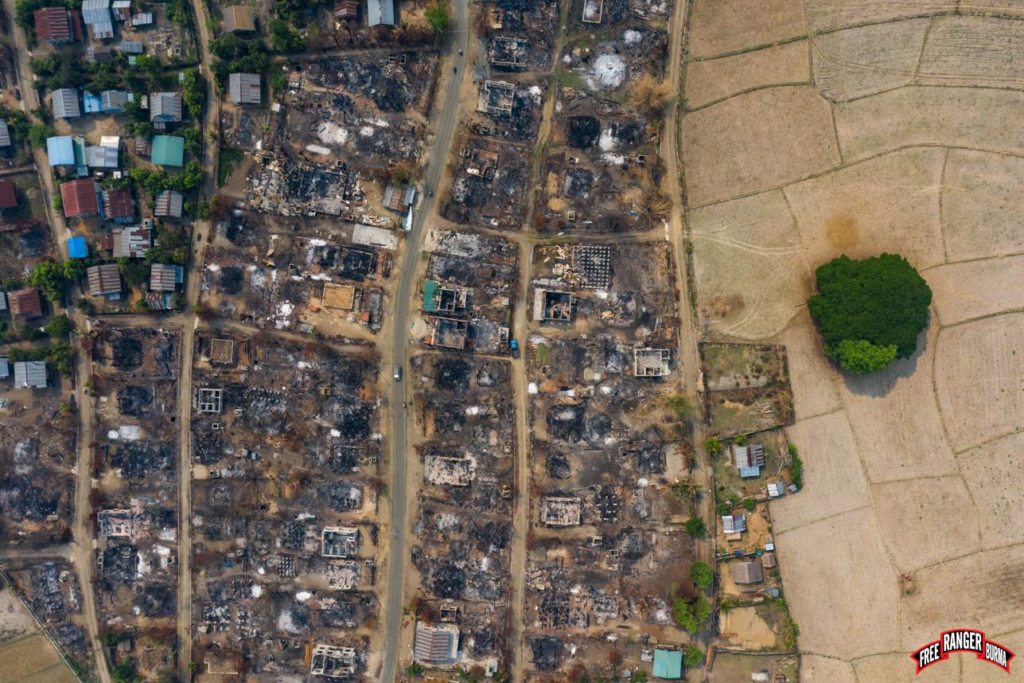
Another villager commented, “Siblings from Si Maw Village were wounded when their ox-cart loaded with properties ran over a landmine planted by the Burma Army. Following this, another landmine was recovered when the LDF conducted a search. Inside some of the houses, the cremated ashes and remains of burials of the Burma Army were found.”
In another instance, Ma Noi (woman, aged 50) from Nawnglat Gyi, was shot dead by the Burma Army in the outskirts of Nan Lan Village when they were destroying the village.
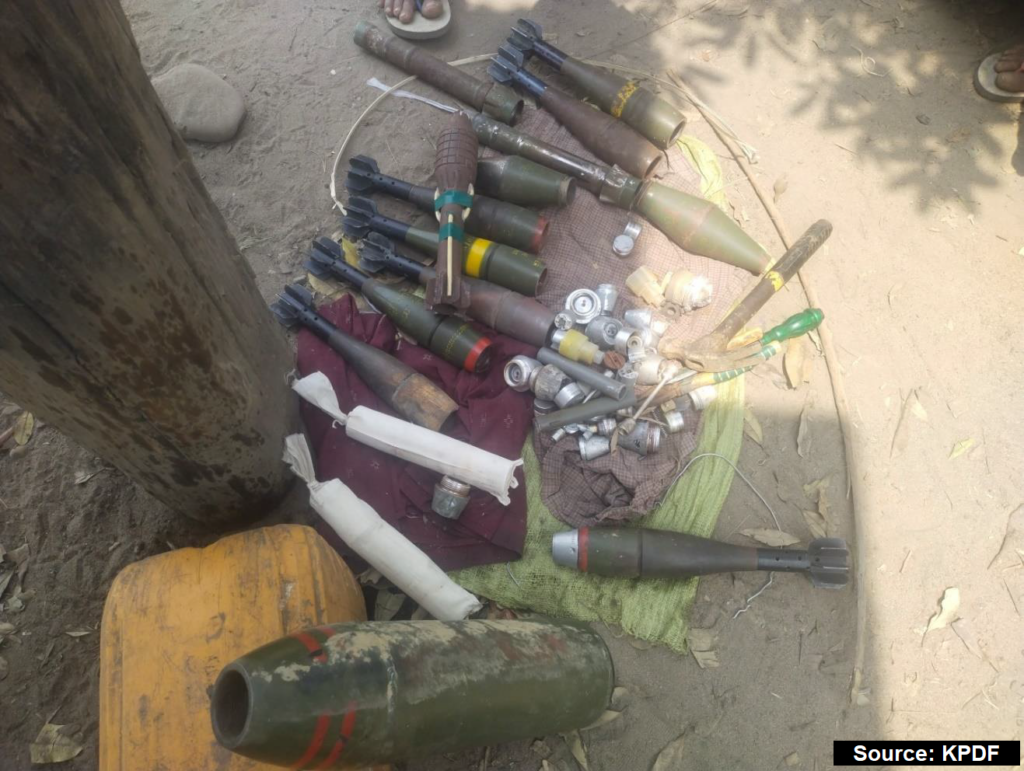
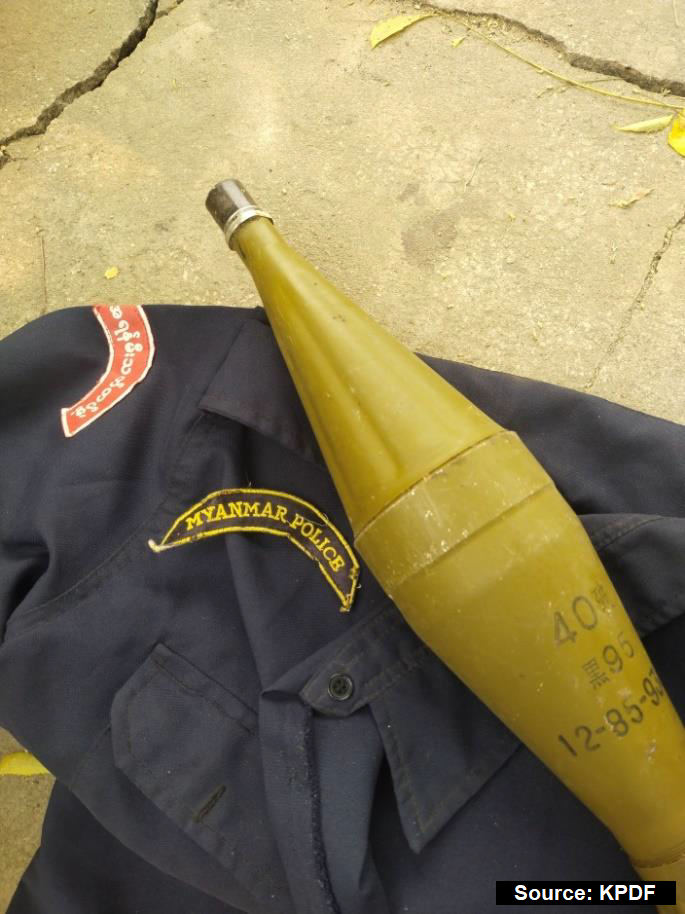
Regarding military impacts from the operation, three KIA soldiers and three LDF personnel were killed; two LDF, two KPDF, and two militiamen were wounded. The bodies of nine Burma Army soldiers, 500 MA bullets, seven RPG projectiles, and some unexploded 60mm mortar shells were recovered after the Man Win and Si Ta clashes.
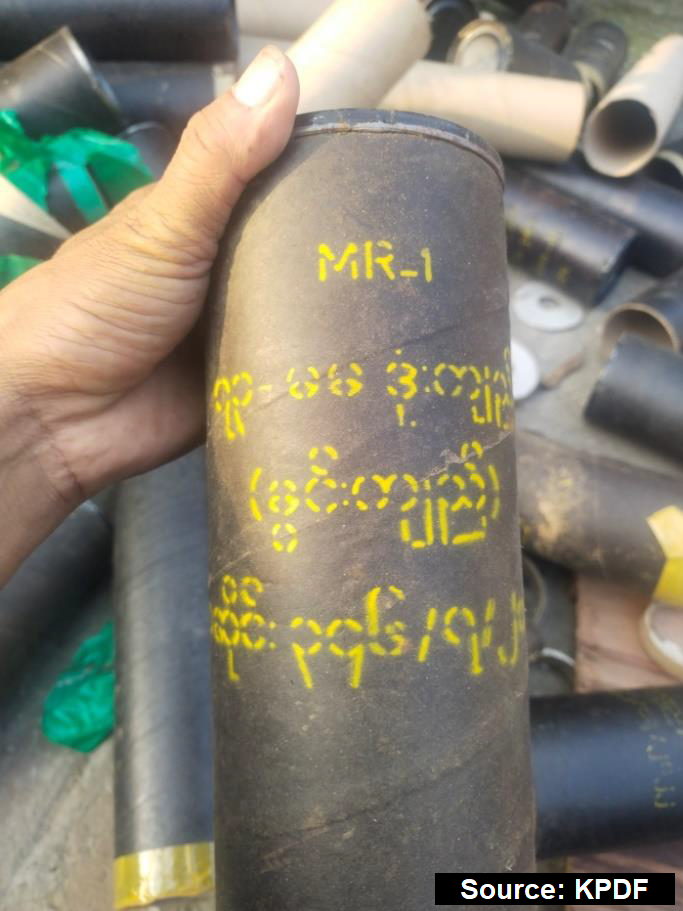
This Burma Army offensive appears to have been pre-planned. This operation is a textbook example of the Burma Army’s “clearance operation,” a common term used by the regime to characterize the destruction of civilian areas. The destruction in Shwegu can be considered pre-planned due to the presence of Light Infantry Division 88 and seven infantry battalions, the massing of mortars and artillery, and the joint coordination of air strikes.
Furthermore, the Burma Army operation appears to have been unprovoked. There had not been any conflict-related activity reported in this area since October of 2022. The Burma Army resolved to destroy these civilian areas, possibly to prevent ethnic Kachin and Shan influence over the Mandalay-Myitkyina transportation route and to try and cement the control of the Burma Army in this area.
The Burma regime also took measures to try and cover up their operation. According to the villagers, fire brigade and police personnel aligned with the Burma Army distributed a video showing themselves trying to douse the flame of the burning houses. The fire brigade and police claimed the fires were started by the PDF, in hopes the Burma Army might be absolved from the mass arson attacks. However, this story does not account for the eye-witness testimonies of attacks and bombings, Burma Army munitions, and uniforms implicating the Burma Army and their security forces.
Status of Internally Displaced Persons (IDPs)
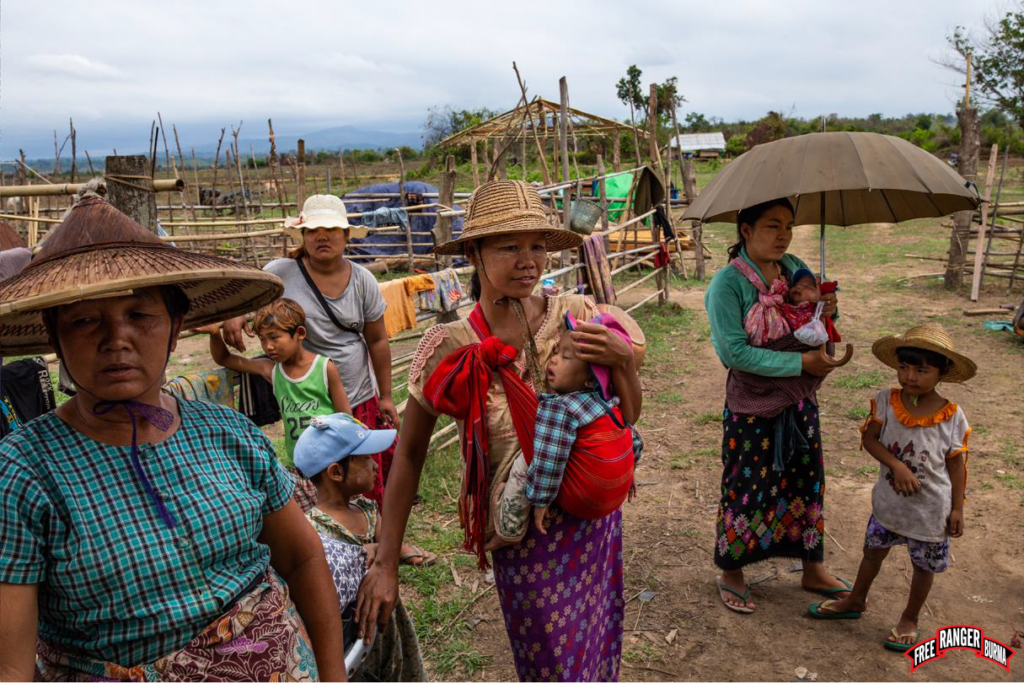
Villagers highlighted the urgent need for medicine, food, water, and shelter for the IDPs. The Kachin Independence Organization (KIO), Civil Disobedience Movement (CDM), and FBR are currently coordinating with the IDPs to provide aid after they fled their homes from the attacks.
After the offensive, some families moved out to their farm fields while others moved into the jungle to find shelter and food. Many villagers did not dare to return for fear of air strikes and there is also the risk of encountering mines. One villager said, “Since the unexploded remnants landing in the field have not yet been dug out and removed, the villagers are afraid of cultivating rice paddies.”
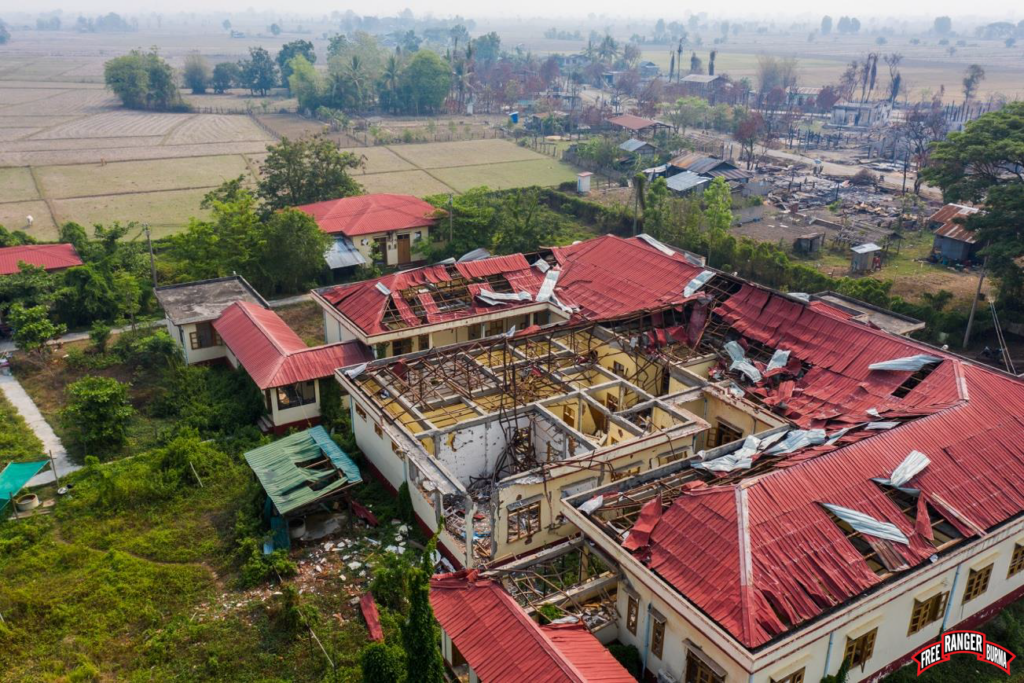
Aid efforts are disrupted because Burma Army targeted everything, including civil-service facilities. According to the villagers, “The Si Tar Public Hospital was destroyed by aerial bombing. So, CDM doctors reached the places where the IDPs were present and gave them medical care in possible ways . Due to difficult transportation within the KIA territories, the medicines were not available in time of need. So that the medicines were being delivered from Bhamo, Shwegu and Mandalay through many risks . The medicines for malaria, flu and abdomen problem are needed now as the monsoon season has come.”
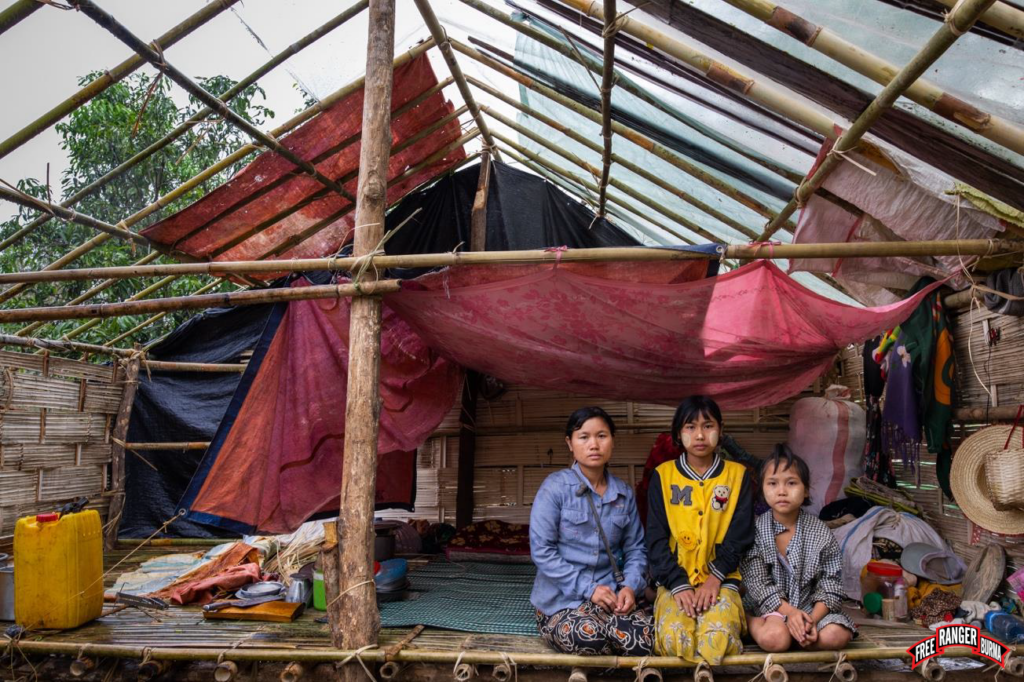
The IDPs are in desperate need of supplies, such as food, drinking water, plastic tarps, blankets, mosquito nets, and shelters. “Most of the villagers are mainly engaged in paddy farming and cattle farm. If the rice farm cannot be harvested in coming monsoon, the consumption would be inadequate. Thus, the villagers also expect the inspection and support of the KIO and international humanitarian organizations when the situation turns to normal.” Before, the villagers got water from the river by pumping with motors, but now it was very difficult to get since there is no electricity for them.
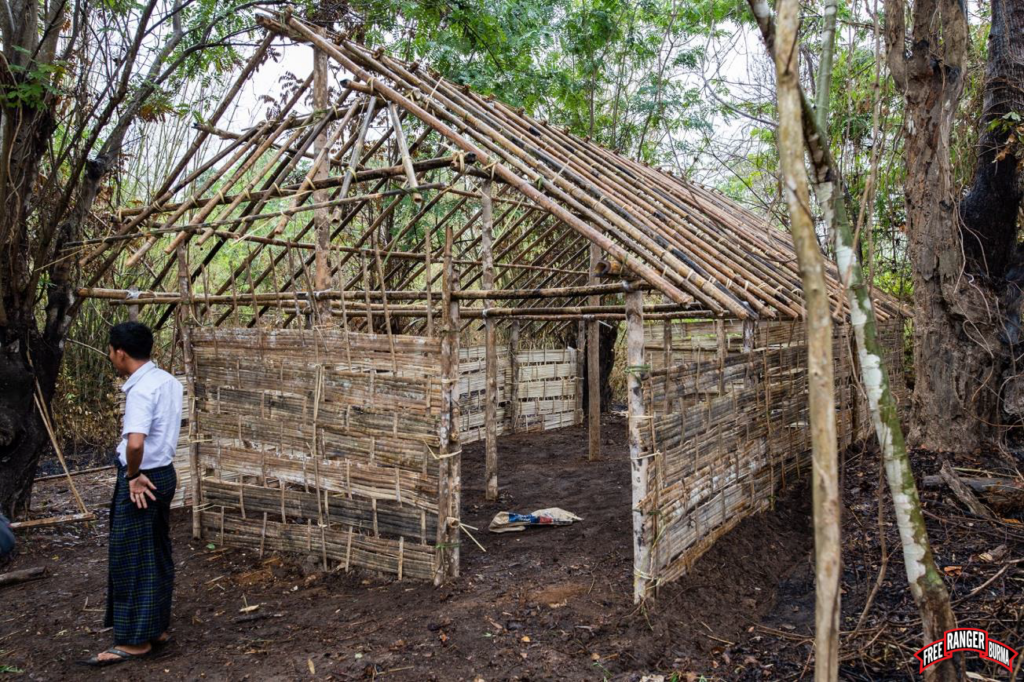
Villagers are working to build schools in the forested area and monastery from nothing. One local teacher remarked on the situation, “As it is located in the KIO controlled area, we would like the school to be opened under the National Unity Government (NUG) guidelines with the cooperation of KIO Education Department. Therefore, we IDPs hope that KIO Education Department will cover the school stationery, the salary of volunteer teachers and CDM, as well as the need for plastic tarps, school supplies, and solar panels.”
Now, after the attacks, the IDPs are afraid and desperate, with many of them deciding to join the Local Defense Force to try and prevent Burma Army attacks like this from happening again. One local commented, “Most of the villagers from Si Ta whose houses burned down were Burma Army supporters. Some were still hiding in the jungle cultivating paddy fields and others were hiding in (a local church). However, around 40 youth joined the LDF after these attacks.”