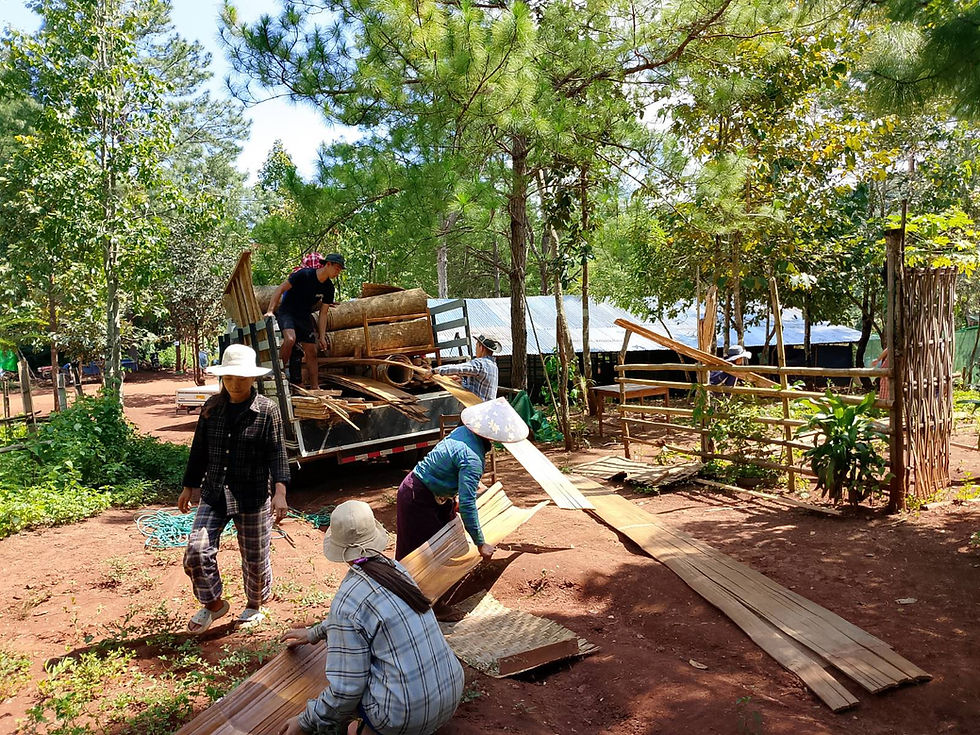
IDPs Recount Recent Violence by the Burma Army

When the Burma Army moves into a region, it is not only the resistance militias that must be on high alert - the civilians and families must be prepared to act before it is too late.
On Feb. 9 of this year, the Burma Army began an offensive in Karen State, establishing control of the Asia Highway and occupying 10 villages within Karen National Union (KNU) territory. Mortar attacks, arson, and the capture of more than 60 villagers were reported within days of the first attacks, perpetrated by soldiers of the Burma military. When the government soldiers took the highway on Feb. 9, it enabled them to capture hundreds of square kilometers in a matter of days, steadily supported by their forces on the western side of the Sittang River, aimed at developing a military corridor deeper into Karen State.
Kyaikto Township, Doo Tha Htoo District, is where this swift occupation took place, and the security situation in this part of Burma has deteriorated rapidly for the civilian population, who are now struggling to find shelter, a secure food supply, and safety amidst the escalating violence. As of Feb. 20, at least 3,000 people remained actively displaced from their homes across the township. KNU leadership in Kyaikto invited Rangers to visit their region to aid the Internally Displaced Persons (IDPs) in the area and help get the news out about their situation.

The first IDP site our team visited was tucked deep under tree cover. Six families, comprising more than 40 people, welcomed us into their camp and were provided with medical care and funds for food. When we asked the group about their displacement, one woman stood up and explained: “We heard gunshots far, then close, we were very afraid. We did not know where to go, only to keep moving, and we kept moving until we come here."

Most of these villagers have fled from Chuang Wa village, a Bamar-Karen community on the Sittang River, which is still being held by the Burma Army. Civilians were forced to flee overnight, many on motorbikes and the backs of overloaded trucks. The village leader of Chuang Wa, a KNU worker who was motivated to oppose the Burma government after the 2021 coup, explained that his house was burned down by Burma Army soldiers as they took over his community on Feb. 9. One man said that he observed dozens of soldiers steal and kill livestock in the village. "They come in and take everything," he said. Other interviewees witnessed arson and ransacking by Burma Army soldiers.

As the team continued to visit IDP camps, it became clear that many displaced people were quite eager to share their stories. Teachers, community leaders, and parents spoke about the tense waiting for the encroaching enemy and finally fleeing for their lives. One woman spoke about the threat of ransom-kidnappings by Burma Army soldiers. A young man voiced concerns for his family's health, telling us, “I worry about my baby brother. We did not have medication for him then; we certainly do not have medication for him now.”

During the relief program at these IDP sites, we helped local leadership with the food distribution to the displaced population, taking time to listen to stories from groups of widows, many of whom have lost their husbands to untreated illnesses. Their desires were simple. "We don't want lots, only to go home, only to be safe," one woman said when asked about her needs.

An IDP site leader told us that the displaced people in the area already face serious illness due to the water source they drink from, a stream known to be polluted by local gold mining operations. With no filtration system or alternative water source, many people at this camp and other sites near the stream have become quite sick. In addition to dysentery and mercury poisoning, some villagers are burdened by complex preexisting health conditions. It is important to understand just how difficult it is for an IDP to receive any amount of healthcare. There is only one qualified trauma surgeon in the area, and the nearest state-funded clinic is an eight-hour drive from the Kyaikto IDP sites. For higher care, the only option for these IDPs is a days-long journey to a hospital on the Thai-Burma border.

On Feb. 25, we joined the local resistance on a journey to several frontline positions to gather stories from the conflict zone and assess the damage done by the Burma Army. The small convoy was led to multiple airstrike locations, including a monastery and a civilian home bombed by the Burma Army in February of last year. The owner of the home, who had fled into the jungle with his wife when the bombing took place, told us about the heartache of losing his house and the challenges of displacement. Before moving on, we gifted the man a cash sum to support the couple and prayed with him before departing.

During our time in disputed territory, we met two young soldiers who had each lost a leg within the last few years. Both men had joined the resistance after the military coup in 2021 and felt it was their duty to take action against the oppressive regime. An amputation and the expected recovery from such a wound are particularly brutal in this part of the world, but despite the limiting injuries, both resistance soldiers explained that they were determined to remain fighting near the front.

The food shortage in Kyaikto Township is alarming. The following day, we secured a large food load for distribution. Families received sacks of rice, onions, garlic, and a bottle of oil, though as we helped with the distribution, local leadership explained yet another roadblock caused by the Burma Army occupation. Most bulk foods are bought in the cities of Doo Tha Htoo District, which are now controlled by the Burma military. Drivers explained that the military has halted the transport of goods used for humanitarian operations, and that soldiers will seize anything believed to be used for the relief of IDPs. Local sources confirmed that the presence of the Burma Army within the district directly correlates to food shortages in the township’s rural communities.

When we arrived at the next IDP site, home to over 200 displaced villagers from the Zee Pyaung village tract, we brought the truckload of food for distribution during a relief program. As the group assembled, we were introduced to the village tract leader, who had fled with his people and now helps oversee management of the IDP camp. He took us on a tour through the rows of makeshift tents and offered an assessment of the dire situation faced by the civilians living at the site: “They cannot work, they cannot buy food, they cannot go back home. Right now, the villagers cannot go anywhere.”

For many of these IDPs, life must go on. With no consistent income, some of the women collect herbs from the jungle to sell. Families make do with what little they could save from their villages. One young woman, whose husband was fighting near the frontline, had given birth to a healthy baby only days before Rangers arrived at the camp.

We spoke with a 76-year-old woman who was captured by Burma Army soldiers on Feb. 10 and held for nine days in a rubber farm outside her village, along with a dozen other villagers. She testified to seeing Burma Army soldiers beating two civilian prisoners and using intimidation tactics on the group. She was deeply relieved when the soldiers let her go, but still feels shaken by the ordeal and is now more terrified than ever of the Burma Army. Another woman, a teacher in her previous village, attested to a group of Burma Army soldiers shooting at her and her two sons while they crossed a field near their village. Other IDPs said they feared for their lives and felt completely helpless when the Burma military mortars began to land close to their homes.
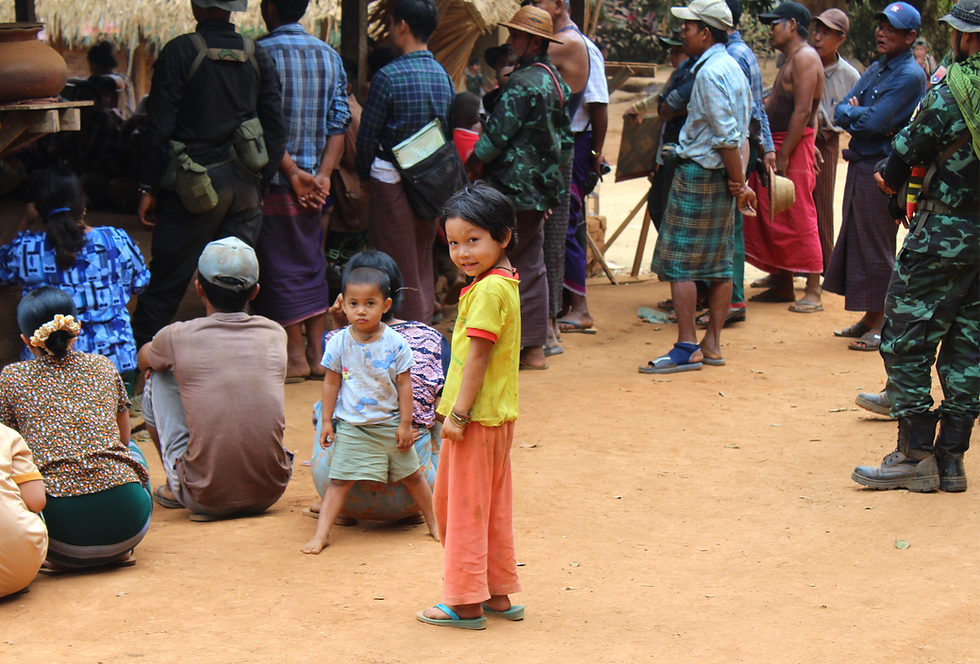
For many civilians in this corner of Karen State, the most recent scramble for safety was the second or third time they had to flee violence by the Burma Army. While conducting a relief program for 140 IDPs in Tee Wa Key village, our team spoke with a man who was injured by a Burma Army mortar strike on his home in Feb. 2025. "I walked outside to bathe and then the mortar hit," he said. Several interviewees had personal encounters with artillery and soldiers over the years and told us about KNU civilian workers who had been captured and killed by the Burma Army since the recent attacks.
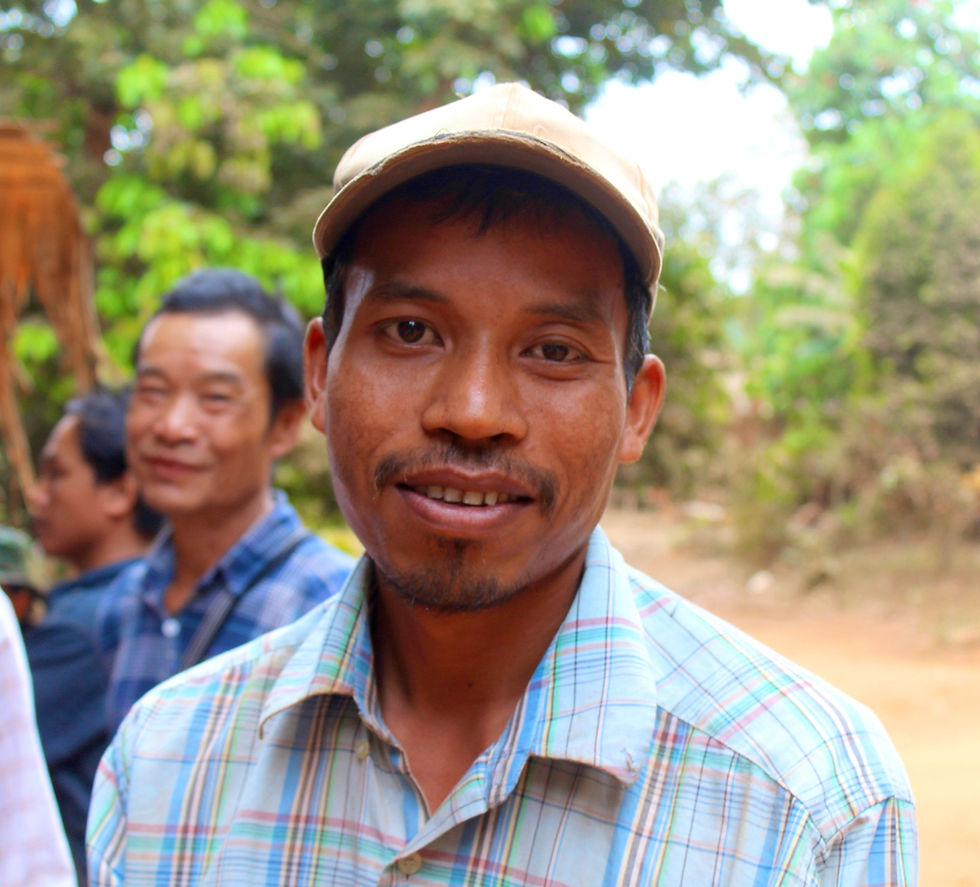
Among a group of 70 IDPs, we met a 23-year-old woman whose husband was killed by Burma military police in 2024. Her husband had been retrieving a load of food from Thein Za Yat for his wife and two young children when he had a confrontation with officers. The next day, his body was presented at a hospital to his mother and wife, and officials were unwilling to explain his death. Two years later, this woman is still impacted by the violence of the Burma Army, not only by the traumatic death of her husband but also by the active displacement she and her children are forced to face. Her story of heartbreak is not uncommon. For many of the IDPs in Kyaikto and across Burma, the hardships created by war have become a part of their daily life.

The situation in Kyaikto Township is critical as the Burma Army continues to mass in the region and terrorize the civilian population. Despite the heavy odds against the oppressed people of Karen State, there are continual efforts to provide supplies for their survival and share their needs with the international community. Though Rangers provided some relief, distributing food to one-third of the displaced population in northern Kyaikto, the IDPs across the district are still in desperate need of medication, adequate shelter, long-term food solutions, and international support.

Thank you to the Rangers who made this mission possible and supported relief efforts every step of the way. FBR is deeply grateful to the resistance brigade in Kyaitko Township, who gave us valuable access to their area of operations. The testimonies gathered from civilians helped clarify the violent methods used by the Burma Army against combatants and non-combatants alike to achieve military control of the district.

Civilians regularly and systematically become primary targets of the Burma Army. Please pray for the displaced people in Kyaikto as their situation progresses, that the Rangers would act wisely and lovingly among this community, and that the Burma Army would stop their violence against civilians.
Thanks and God bless,
The Free Burma Rangers.