Displaced but not Giving Up: Rangers Provide Help and Hope Amid Hardships

Displacement comes with countless challenges: finding food and water on the move; finding medical care when healthcare is completely fractured; caring for one's family and keeping them safe amid the disruption of war. For Internally Displaced People (IDPs) in Burma, safety is the priority, but not far behind it is hanging onto hope. How do you keep hope alive when there are bombers overhead every day and you're not sure when you'll get to go home. Dave Eubank recalls a mission from June, where he and other Rangers offered what they could, when they could. What stood out to him was the need that he could not meet. The IDPs sought to return to their homes. What do you do when hurting people ask for something beyond your control?

The jets screamed down as mothers grabbed their children and ran for cover. 500-pound bombs were dropped by the Burma military on the town of Papun before the jets circled again for an attack with cannons. Although no one was killed, six people passing through the area were wounded. On the day prior, the pro-democracy resistance forces had tried to push the Burma Army out of that area.
The fight for Papun has been going on for two years now. During the battle that day, two resistance soldiers were killed, and nine more were wounded. We were there to provide treatment at the front line. During a previous battle in February, we had treated 88 soldiers, while 23 had lost their lives. The pro-democracy groups have pushed the Burma Army back into three big camps, but due to extensive Chinese and Russian support in the form of jet fighters, drones, artillery, and heavy weapons, the Burma military has been able to keep Papun under its control.
When there was a lull in the fighting, the Ranger team and I came off the front lines and went back into the hiding places to help people there. More than 5,000 people used to live in and around the town of Papun, all of whom are now displaced, forced by the fighting to survive in the wilderness near their old homes.
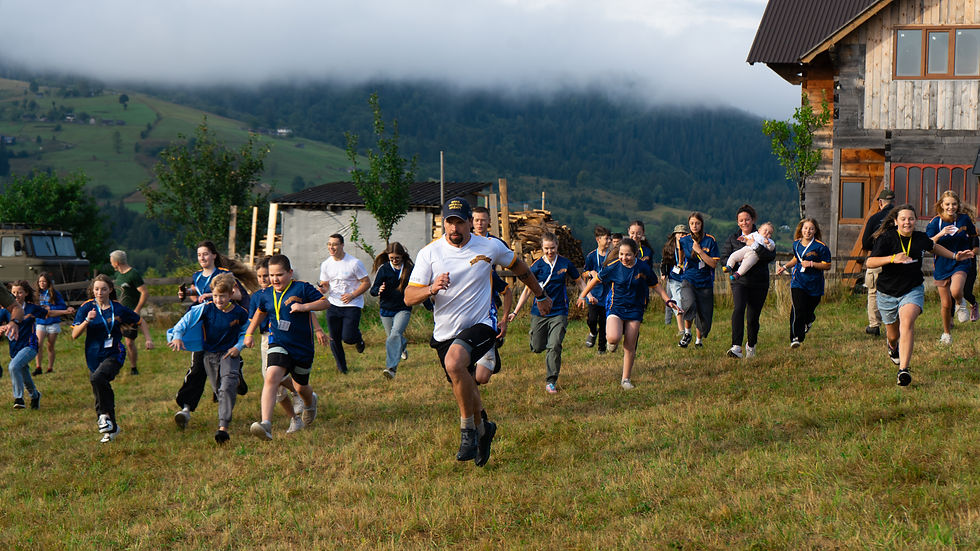
Today, people remain scattered and hiding in the jungle because of the constant attacks. In one particular jungle clearing, 400 children, mothers, and fathers had gathered together from their hiding places for a Good Life Club, led by our Ranger team, to help bring hope to the displaced families. Two Burma military bombing runs happened during the program, causing the IDPs to break for cover.

But each time the jets left, the displaced people came out from their hiding places to rejoin the program. We prayed with them and asked how we could meet their needs, which were mostly food, tarps, clothes, and educational supplies. They asked us a question for which we did not have the answer: “When can we go home?"
We can't answer their question but I can explain our heart and mission. I can tell them what gives us hope. I tell them, "You are valuable in God's sight, and He hates the evil you face. He sent us to you because He loves you, and we love you too. We will stand with you and help you in every way that we can. We will pray that those who did you wrong will meet justice, and we pray for survival and thriving among you. We don't know when you can return home but we know that God is working to make things right. Until that happens, we will pray that you can return home soon, we will tell your story, and we will not leave you."

We prayed and sang songs with the people. We performed the stories of David and Goliath and the prodigal son, as well as skits and presentations educating the group on health and hygiene. The children giggled, and the parents smiled. Very quickly into the program, after the jets had left, everyone began to laugh. It was a time of real joy.
We had a small medical clinic set up to the side of the clearing where our medics treated patients with various sicknesses. We often run these clinics at the same time as a Good Life Club, to give each group a chance to receive medical attention while also listening to the joyous sounds of Ranger programs. At the end of the program, we handed out cash to fund the school for a year, as well as food, tarps, and clothing. What we give to displaced communities is not from us, it's from Christians around the world, who love the people of Burma and send the funding that makes our work possible.

Even though we could not meet their greater need of going home, we could give them love, help, and hope. We could be with them and give them good things, standing with them as their homes were attacked. None of this would be possible without God and your generous assistance. We could not do it without you, and we thank God for each of you.
Love,
Dave, family, and the Free Burma Rangers